
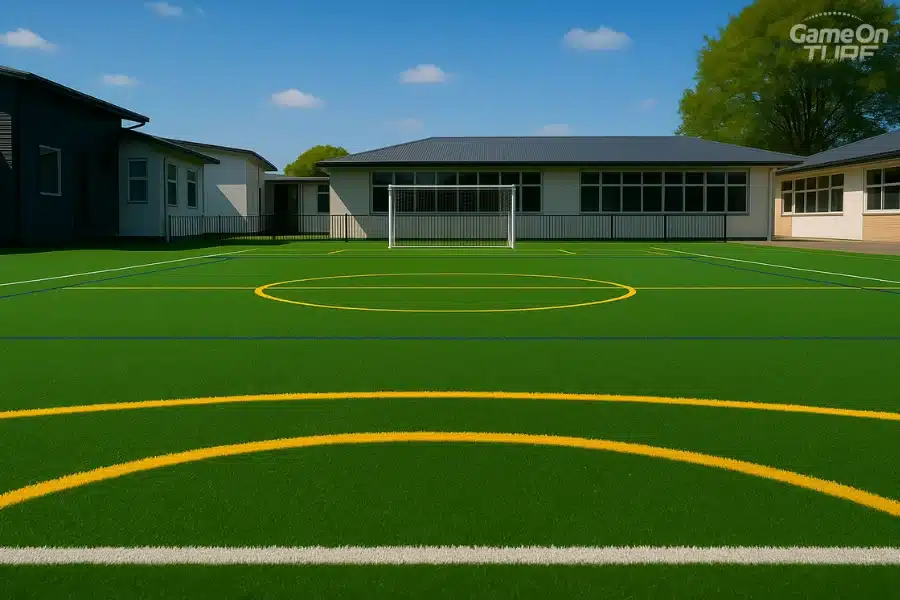
Many schools still rely on concrete or natural grass for their outdoor sports courts. While these were once standard, they often fail to meet the needs of modern schools.
Expectations for safety and student participation are higher than ever. Old surfaces simply can’t keep up. For schools planning upgrades, it is vital to understand why traditional surfaces fall short and why artificial turf is the better long-term choice.
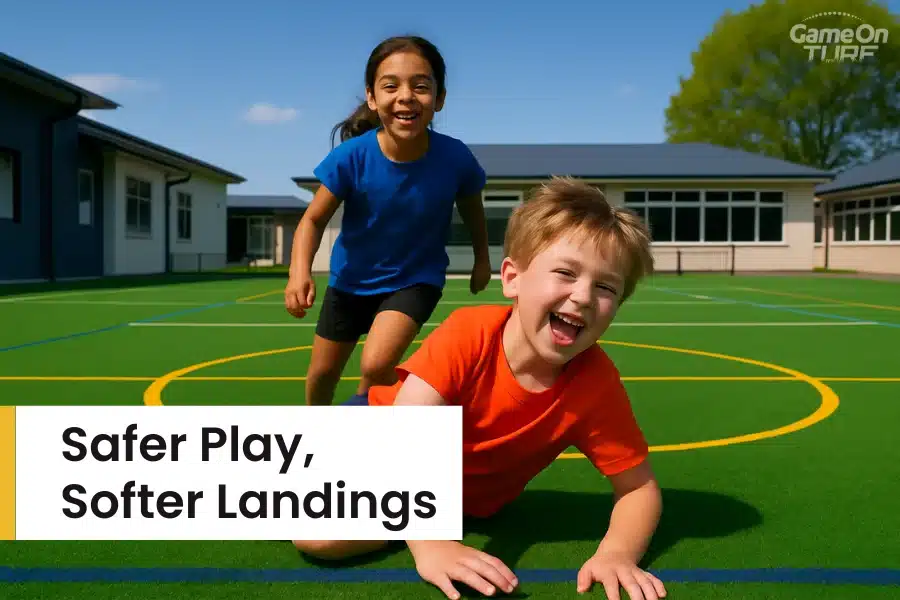
Concrete courts are common in older schools, especially for basketball or netball. While they were cheap to install, concrete poses real risks. Falls on these hard surfaces often result in grazes, bruises, and joint strain.
These injuries can scare younger children and lower their confidence in PE.
Natural grass is softer but brings different risks. Grass wears out over time, creating uneven ground. This creates a tripping hazard and increases the risk of rolled ankles. In wet months, grass becomes muddy and slippery, making it unsafe for sport.
Natural grass depends heavily on the weather. Heavy rain makes fields too soft or muddy to use. This leads to cancelled lessons and postponed sports practices.
Repeated use in wet weather permanently damages the turf. This means more maintenance work and a poor-quality playing surface.
Concrete dries faster but becomes dangerously slippery when wet. It also gets extremely hot in summer. These weather issues make it hard to stick to a PE timetable and reduce the time students can spend outdoors.
Grass and concrete both have hidden costs. Natural grass needs:
These tasks cost money and take up staff time. Even with hard work, it is difficult to keep grass in good condition when hundreds of students use it daily.
Concrete needs less daily care but creates bigger problems later. It develops cracks that are expensive to fix. If left alone, these cracks become safety hazards.
Modern schools need to do more with less space. Student numbers are rising, so schools need facilities that can handle multiple sports.
Concrete and grass limit what you can do. They often require extra equipment or time to set up for different activities. For schools that want to offer a wide range of sports, these old surfaces lack the necessary flexibility.
Artificial turf allows schools to use their courts in all weather conditions. Rain and mud often force schools to cancel sports on grass fields. This stops students from participating and disrupts the curriculum.
Artificial turf solves this. It is ready for use every day, rain or shine.
Natural grass needs “rest” periods to recover. It also gets slippery when wet. This leads to cancelled PE lessons and breaks.
Artificial turf is built with drainage systems underneath. Water drains away quickly, so the court is ready to use shortly after it stops raining. Teachers can plan lessons knowing the surface will be available.
Turf surfaces stay the same quality all year round. They remain level, safe, and look good in every season. Schools don’t have to wait for the grass to grow back or the mud to dry.
The benefits include:
A well-maintained turf court looks professional. Unlike grass, which gets patchy, turf stays green and clean. It creates a welcoming environment for students, parents, and visitors.
No, you cannot lay artificial turf directly on top of existing soil or grass. For a sports court to be safe and durable, it requires a proper sub-base.
If you lay turf on soil, the ground will move, causing the surface to become uneven. It will also suffer from poor drainage, leading to waterlogging. A proper installation involves excavating the soil and installing a compacted rock or crushed stone base. This ensures the court stays flat, drains well, and is safe for students to run on.
Student safety is the top priority. Whether it’s a PE lesson or a lunch break, the ground needs to be safe. Artificial turf is designed to support movement and reduce injury risks.
Concrete is unforgiving. A fall on concrete hurts. Artificial turf feels softer underfoot. Most school turf systems have a shock-absorbing layer underneath.
This layer cushions the impact of running and jumping. It is safer for joints and makes falls less painful. This is crucial for younger children who are still learning balance. It gives them the confidence to play without fear of getting hurt.
Turf offers consistent grip. Students are less likely to slip on turf than on wet concrete or mud. Because the surface is engineered to stay flat, there are no hidden holes or ruts to trip over.
This reduces minor injuries and helps teachers run active sessions with peace of mind.
Artificial turf is great for accessibility. It provides a stable surface for wheelchairs and walking aids. There is no mud or uneven ground to block access.
This makes it easier for schools to include everyone in PE. For students with sensory needs, the predictable texture of turf can also be more comforting than rough concrete or dirty grass.
When students feel safe, they play more. A good surface boosts participation in sports and games. Over time, this improves physical health and focus in the classroom.
Artificial turf invites students to be active. It removes the barriers of mud, hardness, and poor conditions.
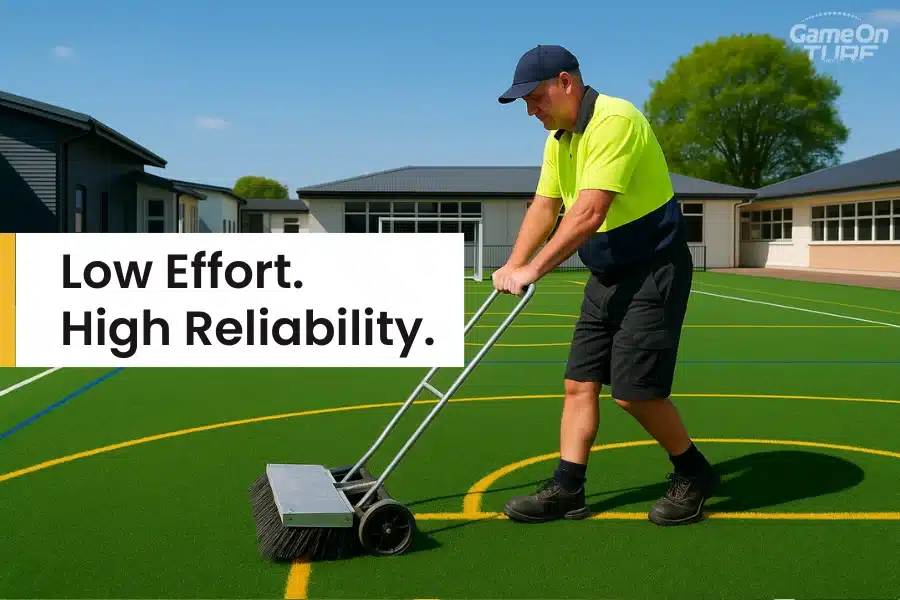
For school administrators and facility managers, ongoing surface maintenance is one of the biggest For facility managers, maintenance is a headache. Grass and asphalt need constant work and money. Artificial turf changes this. It is built to last with minimal effort.
Grass needs mowing, watering, and fertilising. Concrete needs crack repairs. Artificial turf avoids most of this.
Routine turf care is simple:
These tasks are quick and don’t require expensive specialists. The surface is always ready to use.
A high-quality artificial turf sports court typically lasts between 12 to 15 years with proper maintenance.
Factors that influence this lifespan include the volume of foot traffic, the type of sport played, and how well the maintenance schedule is followed. While the upfront cost is higher than grass, the long lifespan and lack of daily maintenance costs make it a smart financial choice for schools over the long term.
Turf costs more to install, but it saves money over time.
This makes costs predictable, which helps with school budgeting.
Turf maintenance can happen during holidays or after hours. It rarely requires closing the court. This keeps the area open for students. It also reduces the need for heavy machinery on school grounds, keeping the campus safer.
Modern turf systems are becoming more eco-friendly. They save huge amounts of water by eliminating irrigation. They also stop chemical runoff from fertilisers entering the soil. This helps schools lower their environmental impact.
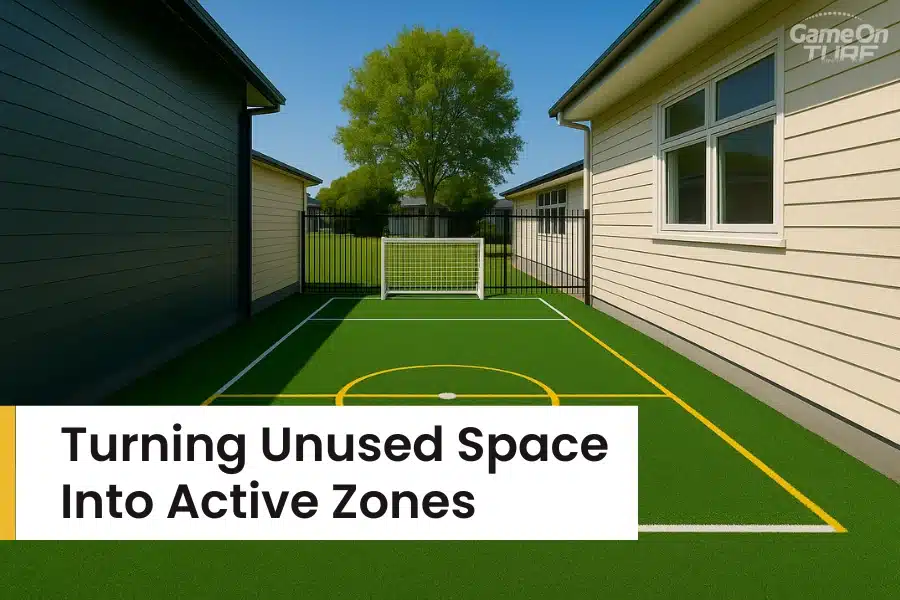
Many schools today face the challenge of accommodating more students and offering more physical aMany schools need more space but can’t buy more land. Artificial turf helps you use the space you already have.
Turf can go where grass won’t grow. You can turn shady spots, gaps between buildings, or uneven patches into useful play areas.
This increases your usable space without needing new buildings.
More students mean more demand for sports areas. Artificial turf can handle back-to-back use without getting damaged. You don’t need to “rest” the field. This is vital for schools with large student numbers or tight timetables.
Turf areas can be clearly marked and fenced. This makes it easier for teachers to supervise students. A flat, clean surface also means fewer accidents, creating a safer environment for everyone.
Installing a multi-use turf court can save money on new buildings. One court can serve as a PE classroom, a break-time playground, and a sports training area. This solves space issues quickly and cost-effectively.
Artificial turf is the clear winner for modern schools. It solves the safety and weather problems of concrete and grass. It creates a reliable, safe place for students to learn and play.
Beyond the daily benefits, it helps schools plan for the future. It lowers costs, improves the look of the school, and maximizes space. For school leaders, artificial turf is a practical investment that supports student wellbeing and school goals for years to come.
SEO By 
